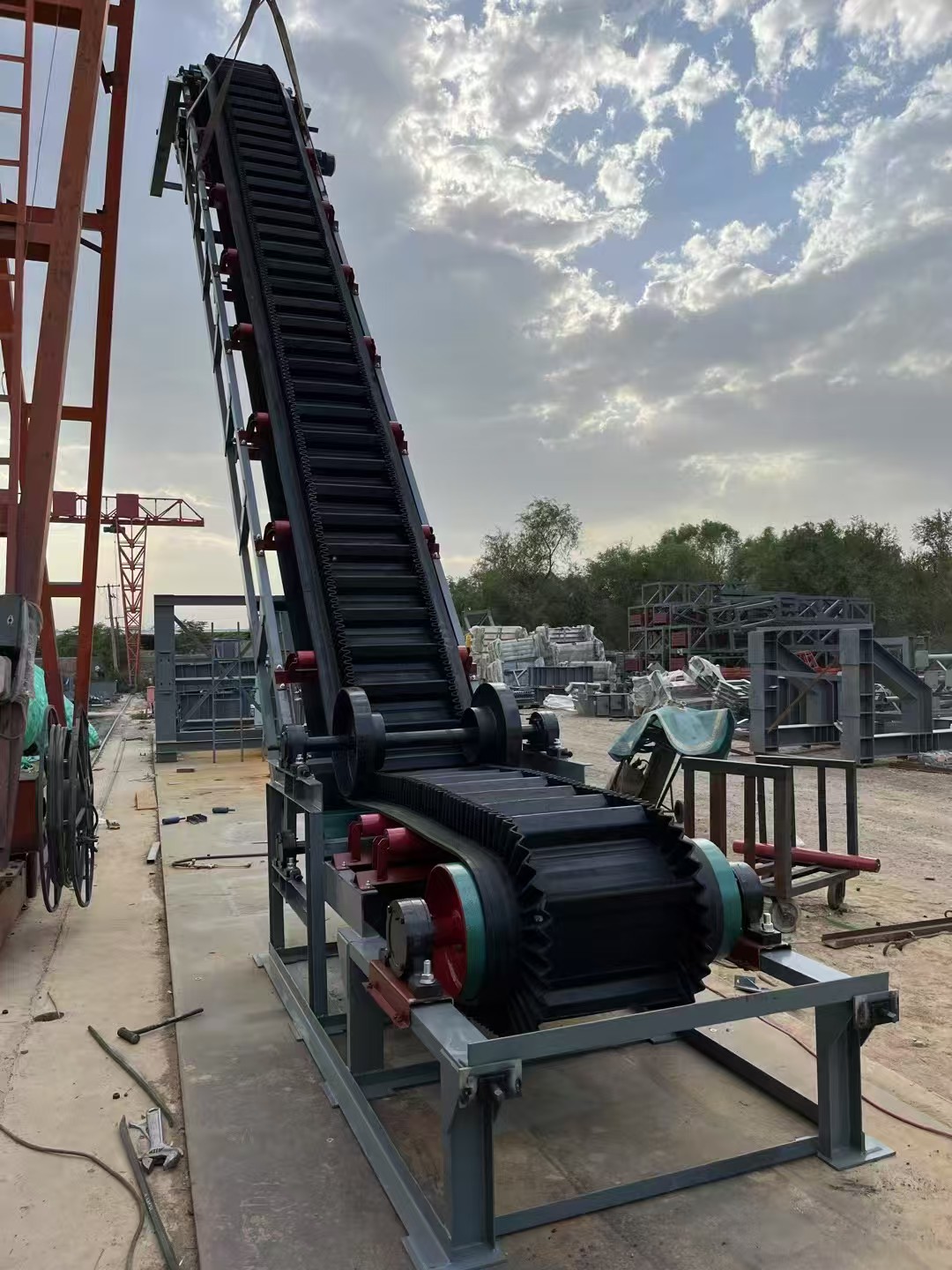
Industrial Conveyor Belt Overview
I. Basic Definition
Conveyor belts, also known as conveyor belts or transmission belts, are the core load-bearing and traction components of belt conveyors. They are primarily made of rubber, fabric, and steel wire, and rely on continuous operation to transport materials. They are the most widely used continuous conveying accessories in industrial production. They feature simple structure, stable operation, large conveying capacity, convenient maintenance, and strong adaptability, enabling horizontal, inclined, and turning conveying.
II. Basic Structure
Mainstream rubber conveyor belts consist of three parts:
1. Cover Rubber: Divided into upper and lower surface rubber layers, these directly contact the material and provide wear resistance, temperature resistance, corrosion resistance, and anti-slip properties. This is the key layer determining the belt's service life.
2. Skeleton Layer (Belt Core): Composed of cotton canvas, polyester fabric, steel wire rope, etc., this layer bears tensile force, ensuring the belt's strength, toughness, and tear resistance, and determining the maximum conveying distance and load capacity.
3. Side Rubber: Protects the sides of the belt, preventing wear, cracking, and delamination, and preventing material from getting stuck and causing damage.
III. Main Classifications and Characteristics
1. Classification by Material
• Rubber Conveyor Belts: General industrial type, strong toughness, wear resistance, impact resistance, high cost-effectiveness, suitable for heavy-duty and high-wear scenarios such as mines, mixing plants, and cement plants.
• PVC/PU Lightweight Conveyor Belts: Lightweight, hygienic, non-toxic, and easy to clean, widely used in food, electronics, packaging, and light industrial production lines.
• Special Material Belts: Silicone, Teflon, etc., primarily for high temperature and corrosion resistance, suitable for high-temperature and highly corrosive working conditions.
2. Classification by Performance and Function
• Ordinary Wear-Resistant Conveyor Belts: General-purpose, preferred for conveying sand, gravel, coal, and general bulk materials, standard configuration for mixing plants.
• Heat-Resistant Conveyor Belts: Can withstand high-temperature materials, used in metallurgy and clinker conveying.
• Oil/Acid/Alkali Resistant Conveyor Belts: Resistant to erosion by oils, acids, and alkalis, widely used in the chemical industry.
• Flame-Retardant Conveyor Belts: Possess fire-retardant properties, specifically designed for flammable and explosive environments such as underground coal mines. • Inclined-angle sidewall conveyor belt: Equipped with baffles and partitions to prevent material slippage, suitable for applications involving feeding at steep angles.
• Patterned conveyor belt: With a patterned surface, it offers excellent anti-slip properties and is primarily used for inclined conveying and transferring light materials.
IV. Main Uses and Application Industries
As a core component of continuous conveying equipment, it is mainly used to transport lumpy, granular, powdery, bagged, and finished goods, covering all industrial sectors:
1. Building Materials: Concrete mixing plants, sand and gravel plants, cement plants, conveying sand, gravel, fly ash, cement, etc.
2. Mining and Coal: Various mines, coal washing plants, conveying ore, raw coal, and slag;
3. Metallurgy and Chemical Industry: Smelters, chemical plants, conveying furnace materials, chemical raw materials, and waste residue;
4. Grain, Oil, and Food: Grain depots, food processing plants, conveying grain, ingredients, and packaged finished products;
5. Port Logistics: Docks, freight yards, sorting centers, completing the loading, unloading, and transfer of bulk cargo;
6. Environmental Sanitation and Light Industry: Waste treatment plants, various processing plant production lines, conveying solid waste, parts, and packaging materials.
V. Core Advantages
1. Large conveying capacity, capable of continuous operation for extended periods, and high operating efficiency;
2. Low operating noise and vibration, reducing material breakage;
3. Flexible installation, with adjustable length and angle to suit different sites;
4. Stable structure, simple daily maintenance, and low repair costs;
5. Good sealing performance, combined with a dustproof structure to effectively reduce dust and improve the working environment.
VI. Daily Use and Maintenance Points
1. Do not overload the belt. Avoid strong impacts from large, sharp materials to prevent tearing and scratches;
2. Regularly check belt tension and adjust promptly to prevent misalignment and slippage;
3. Keep idlers and rollers rotating smoothly. Clean any adhering materials from the belt surface to prevent accelerated localized wear;
4. For outdoor use, protect from sun, rain, and frost to delay rubber aging;
5. Repair or replace any belts immediately if peeling, cracking, delamination, or damage is found to prevent further damage.