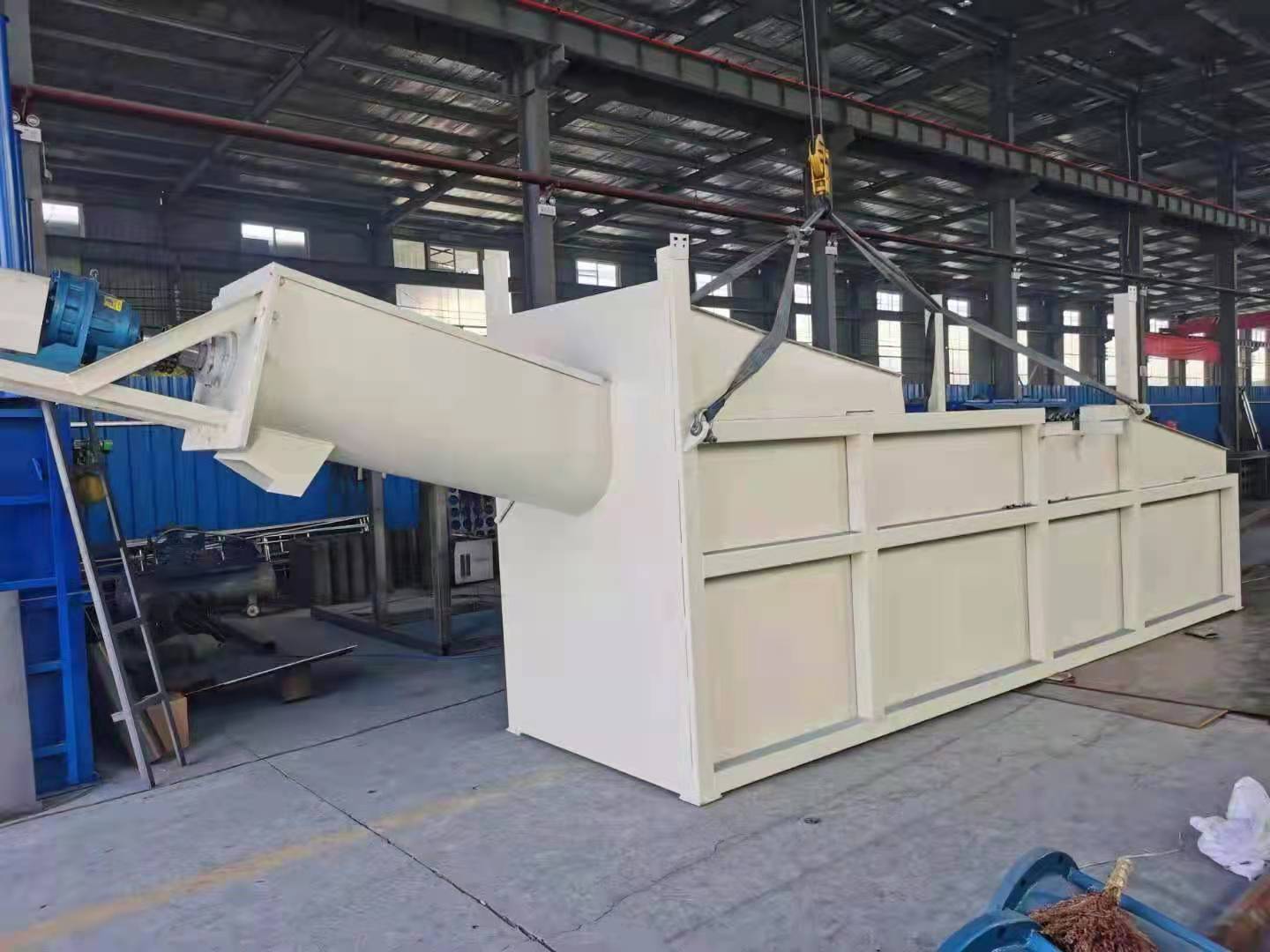
Introduction to Rotary Drum Sand and Gravel Separators
Roller drum sand and gravel separators are core environmental recycling equipment in the construction, mining, and environmental protection fields. Based on the physical principle of rotary drum screening combined with spray washing, they efficiently separate sand, gravel, and slurry from waste concrete and construction waste, achieving aggregate recovery and wastewater recycling. They are standard equipment in mixing plants and resource recovery plants.
I. Core Working Principle
Materials enter the inclined rotating drum through the feed inlet. The inner wall of the drum is equipped with a special screen, which, combined with a high-pressure spray system, continuously washes the material:
1. Small-diameter sand and gravel fall through the screen and are collected and discharged by a screw mechanism;
2. Large-diameter aggregates and impurities are conveyed to the slag discharge port along the drum's inclination angle and discharged;
3. Slurry and wastewater are discharged from the bottom and enter a sedimentation tank for recycling; The entire process combines centrifugal force, gravity, and screening to continuously complete "dispersion-washing-grading," efficiently processing both dry and plastic concrete.
II. Main Structural Components
• Drum: The core screening component, made of Q345B wear-resistant steel/polymer lining, wear-resistant and anti-clogging, suitable for high-humidity and high-viscosity waste conditions;
• Transmission Device: Motor + gear/belt drive, ensuring uniform and stable drum rotation;
• Spray System: High-pressure water spray removes cement slurry from the surface of sand and gravel, improving cleaning cleanliness;
• Screw Discharge Mechanism: Precisely conveys the separated sand and gravel, avoiding secondary mixing;
• Control System: PLC fully automatic control, supporting remote monitoring and manual/automatic dual-mode switching.
III. Core Advantages and Features
1. High Processing Capacity: Suitable for high-capacity scenarios with a daily processing capacity of over 200 tons, with a single unit processing capacity of 30-300 tons/hour, supporting simultaneous processing of multiple tanker truck waste in dual-station configurations;
2. Durable and Low Failure Rate: High-strength, wear-resistant body, capable of withstanding long-term high-intensity operation, less prone to jamming, low maintenance costs, and short downtime;
3. High Recycling Efficiency: Sand and gravel recycling rate can reach over 98%, with high cleanliness of separated aggregates, allowing for direct remixing and reuse;
4. Environmentally Friendly and Zero Emissions: Equipped with a circulating water system, sludge is reused after sedimentation, with no wastewater or waste discharge, meeting environmental supervision requirements;
5. Wide Adaptability: Can process both dry and wet materials, suitable for various working conditions such as tanker truck tailings, construction waste, and natural sand and gravel desliming and grading.
IV. Main Application Scenarios
• Commercial concrete mixing plants: Recycling tailings from washing tank trucks and waste concrete aggregates; accounting for 65% of market demand.
• Construction waste recycling plants: Fine sorting of crushed aggregates to purify and recycle sand and gravel.
• Aggregate production lines: Washing, desliming, and particle size classification of natural/manufactured sand.
• Mining/tailings treatment: Ore pretreatment and recycling of tailings sand and gravel.