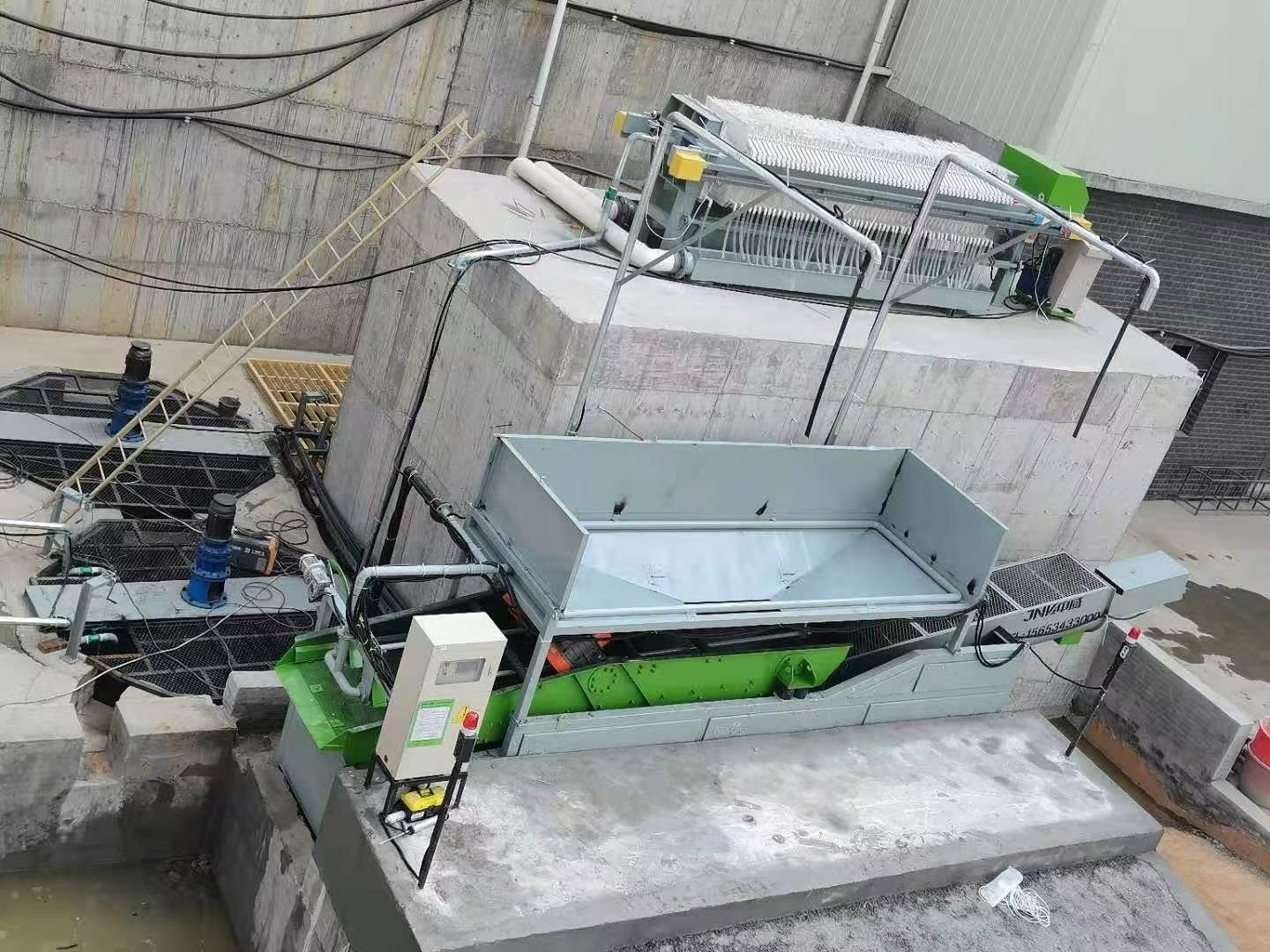
Sand and Gravel Separator + Filter Press: Complete Daily Maintenance
I. Daily Maintenance of the Sand and Gravel Separator
(I) Pre-shift Start-up Inspection
1. Clean the drum, screen, and feed chute of solidified concrete, reinforcing steel, and other debris; ensure no material blockage.
2. Ensure the spray pipes and nozzles are unobstructed and the water pressure is stable.
3. Ensure the motor and reducer anchor bolts are tight, and the belt/chain tension is appropriate.
4. Ensure all bearings are secure, there is no abnormal overheating, and there is no slurry leakage from the shaft ends.
5. Ensure the electrical control box is dry and free of water accumulation; check for emergency stop and ensure the wiring is intact.
6. Ensure the sedimentation tank and return water pipes are unobstructed and that sludge does not accumulate.
(II) In-operation Inspection
1. Ensure there are no abnormal noises or severe vibrations; the motor and reducer temperatures do not exceed 60℃.
2. Ensure thorough sand and gravel separation; there is no overflow or material leakage.
3. Ensure the drum and shaft seals are free of mud leakage.
4. Large pieces of concrete and steel bars are strictly prohibited from being poured in to prevent equipment jamming.
(III) Post-shift maintenance (daily mandatory)
1. Thoroughly rinse the drums, screens, and screw conveyor with high-pressure water to prevent cement caking.
2. Clean the chain, woven bags, and steel bars from the drums.
3. Lubricate all bearings, rollers, and chains with grease.
4. Check the reducer oil level; add the same type of lubricating oil if insufficient.
5. In winter, drain water pipes and pumps to prevent freezing and cracking.
6. Clean the area around the equipment and unclog drainage ditches.
(IV) Weekly maintenance
1. Tighten all bolts on the machine.
2. Adjust belt and chain tension; replace damaged parts promptly.
3. Clean dust from the reducer's cooling system; change the oil immediately if it turns black or emulsifies.
4. Inspect the screen for damage; repair or replace if necessary.
5. Clean the sedimentation tank of sludge and verify the safety switches.
(V) Monthly deep maintenance
1. Disassemble the main shaft bearing and replace aged oil seals.
2. 1. Inspect the wear-resistant liners and blades of the drum; replace those with excessive wear.
2. Inspect the water pump and pipelines, and clean the internal sludge.
3. Level the equipment to prevent one-sided wear.
II. Daily Maintenance of the Filter Press
(I) Pre-shift Inspection
1. Filter plates are neatly arranged, without cracks or damage; filter cloth is free of tears and holes.
2. Hydraulic station oil level is normal; oil pipes and cylinders are free of oil leakage; pressure gauge is accurate.
3. Feed pipes and valves are unobstructed; gaskets are intact and leak-free.
4. Pulling chain and trolley guide rails are free of jamming; limit switches are sensitive.
5. Filtration tank and discharge area are clean; no sludge accumulation or blockage.
(II) Operational Inspection
1. Compacting pressure is controlled within the rated range; no overpressure.
2. Filtration water output is uniform during feeding; no large-area sludge leakage.
3. Feed pump vibration and temperature are normal; no abnormal noise or material leakage.
4. The mud cake forms evenly, and the unloading is smooth and non-stick.
(III) Post-shift maintenance (daily required)
1. Start the water washing device to rinse the filter cloth, clean the pores of sludge, and prevent clogging.
2. High-pressure water rinse the filter plates, filtrate tank, and feed pipe.
3. Wipe the cylinder piston rod to prevent sludge from scratching the oil seal.
4. Clean hard debris between the filter plates to prevent damage to the filter plates and filter cloth.
5. In winter, drain the pipeline and water pump to prevent freezing and cracking.
(IV) Weekly maintenance
1. Tighten all bolts on the frame, cylinder, and pipeline.
2. Clean the hydraulic station cooling fan and oil tank filter.
3. Add grease to the chain and rollers, and adjust the chain tension.
4. Verify the pressure gauge, solenoid valve, and limit switch.
5. Clean the feed pump impeller of sludge.
(V) Monthly deep maintenance
1. Replace leaking cylinder oil seals and aged gaskets.
2. 1. Clean the filter plate sealing grooves; replace deformed or cracked filter plates.
2. Check the wear of the bearings and guide rails of the plate pulling trolley.
3. Check the insulation of the motor wiring and tighten the electrical control terminals.
III. General Safety Maintenance Regulations
1. Power must be disconnected and tagged before any maintenance, cleaning, or parts replacement; live work is strictly prohibited.
2. High-pressure water must not be directly sprayed onto the motor, electrical control cabinet, or hydraulic electrical components.
3. Lubrication and cleaning should only be performed after the equipment has completely stopped.
4. The hydraulic system must be depressurized before disassembly.
5. Do not put your hands into the drum of the sand and gravel separator; do not put your hands between the filter plates when closing the filter plates in the filter press.